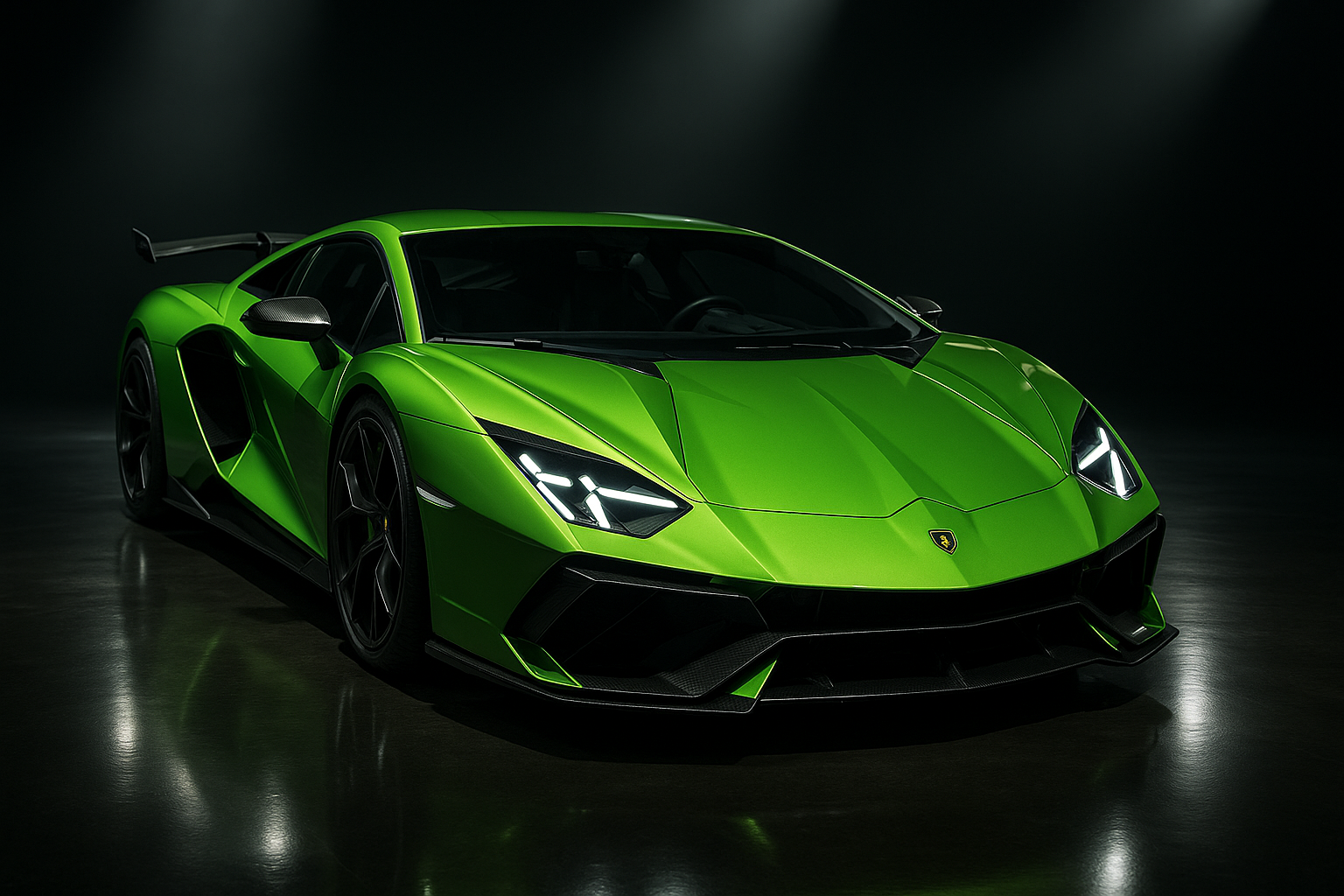
Ford just dropped a bombshell that has European supercar manufacturers scrambling for answers. The all-new 2024 Mustang GTD has officially lapped the Nürburgring Nordschleife in 6:57.685, making it the first American production car to break the seven-minute barrier at the Green Hell and placing it among an elite group of track-focused exotics.
This isn’t just fast—this is a seismic shift in the performance car hierarchy. The $325,000 Mustang GTD has now outpaced the Lamborghini Aventador SVJ, McLaren 765LT, and sits just seconds behind the Porsche 911 GT2 RS. For context, Ford’s halo car has achieved what many thought impossible: making a Mustang competitive with six-figure European track weapons.
Ford Mustang GTD Nürburgring Lap Time Shocks Industry
The lap was completed under official timing by sport auto magazine, with professional racing driver Dirk Müller behind the wheel. The sub-seven-minute achievement validates Ford’s three-year development program and confirms the GTD isn’t just marketing hype—it’s a legitimate track monster with street credentials.
Jim Farley, Ford CEO, didn’t hold back on social media following the announcement: “This is what happens when you let engineers chase perfection. The Mustang GTD proves American engineering can beat anyone, anywhere.”
What Makes The Mustang GTD So Fast?
The GTD isn’t your neighbor’s 5.0-liter pony car. Ford Performance stuffed a supercharged 5.2-liter V8 under the hood producing over 800 horsepower, mated to an eight-speed dual-clutch transmission borrowed from racing applications. But power alone doesn’t conquer the Nordschleife—aerodynamics and suspension geometry do.
Key performance technologies include:
- Active aerodynamics generating over 1,100 pounds of downforce at speed
- Semi-active suspension with hydraulically cross-linked dampers inspired by GT3 race cars
- Carbon ceramic brakes with aggressive cooling ducts
- Titanium exhaust system saving 40 pounds over conventional steel
- Carbon fiber body panels reducing weight to approximately 3,550 pounds
The GTD also features pushrod front suspension geometry—a rarity in road cars—derived directly from Ford’s GT supercar program. This setup allows for more precise camber control through high-speed corners, critical for maintaining grip on the Nürburgring’s 73 turns.
How This Lap Time Compares to Competitors
The 6:57.685 lap time places the Mustang GTD in rarefied air. It’s now faster than:
- Lamborghini Aventador SVJ: 6:58.16
- McLaren 765LT: 7:00.00 (estimated)
- Porsche 911 GT3 (992): 6:59.927
- Mercedes-AMG GT Black Series: 6:43.616 (still king)
While the Mercedes-AMG GT Black Series still holds a significant advantage, Ford’s achievement is remarkable considering the GTD’s price point and American muscle car heritage. This isn’t a limited-production hypercar—it’s a Mustang that happens to embarrass million-dollar exotics on track.
Production and Availability Challenges
Don’t expect to walk into a Ford dealership and drive one home. The Mustang GTD is hand-built at Ford’s Flat Rock Assembly Plant in Michigan, with production limited to approximately 1,000 units. Prospective buyers underwent an application process, and many allocation slots sold out within hours of announcement.
Ford hasn’t confirmed exact production numbers, but industry insiders suggest fewer than 300 units will be produced in the first year. With a base price of $325,000—before dealer markups—the GTD represents Ford’s most expensive production vehicle outside the previous-generation GT supercar.
What This Means for American Performance Cars
The Mustang GTD’s Nürburgring lap time is more than just bragging rights—it’s a statement about the current state of American automotive engineering. For decades, domestic manufacturers chased European rivals in handling precision and track capability. The GTD proves that gap has closed, if not reversed entirely.
This achievement puts pressure on Chevrolet’s Corvette Z06 and ZR1 programs, both of which target similar track-focused customers. It also signals Ford’s commitment to halo performance vehicles despite industry-wide electrification pressures.
The Future of Ford Performance
Looking ahead, Ford Performance has confirmed the GTD represents just the beginning of a new era for Mustang. While the company hasn’t announced specific plans for a hybrid or electric track variant, insiders suggest the aerodynamic and suspension lessons learned from the GTD program will influence future performance models across Ford’s lineup.
The seven-minute barrier was once considered the domain of exotic European manufacturers with unlimited budgets and racing pedigrees. Ford just proved that American ingenuity, combined with motorsport-derived technology and obsessive engineering, can compete with—and beat—the world’s best. The Mustang GTD isn’t just fast; it’s a paradigm shift for what a production muscle car can achieve.