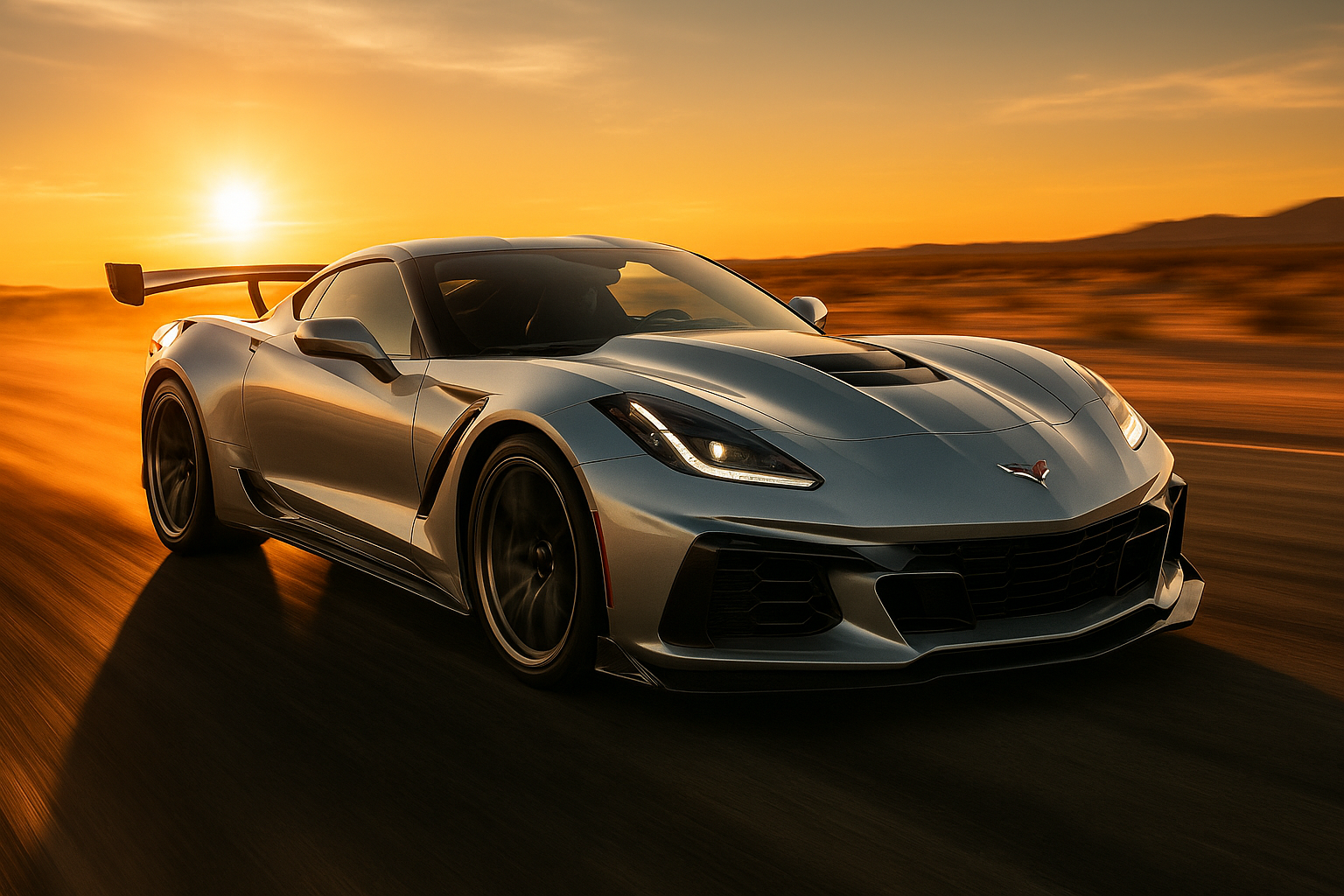
The Chevrolet Corvette E-Ray is rewriting the rules for America’s sports car. In a stunning reversal of expectations, the hybrid all-wheel-drive Corvette is now outselling its traditional gas-powered Stingray sibling in several major U.S. markets, signaling a dramatic shift in buyer preferences that even General Motors didn’t anticipate.
Launched as the first electrified Corvette in the nameplate’s 70-year history, the E-Ray combines a 6.2-liter V8 with a front-mounted electric motor to deliver 655 horsepower and blistering 0-60 mph times of just 2.5 seconds. What was initially positioned as a niche performance variant has quickly become the Corvette of choice for buyers willing to pay the premium.
Chevrolet Corvette E-Ray Sales Surge Beyond Expectations
According to dealer reports and regional sales data analyzed this week, the E-Ray now accounts for nearly 40% of all Corvette deliveries in California, Florida, and Texas—three of the model’s strongest markets. In some individual dealerships, E-Ray orders are outpacing Stingray requests by margins as high as 60-40.
The shift is particularly notable given the E-Ray’s starting price of $104,295, nearly $40,000 more than the base Stingray. Buyers are clearly willing to pay for the combination of hybrid technology, all-weather traction, and the bragging rights of owning Corvette’s most technologically advanced variant.
Why Buyers Are Choosing Hybrid Over Pure V8
Industry analysts point to several factors driving the E-Ray’s unexpected popularity:
- All-wheel-drive capability: The electric front motor enables true AWD for the first time in Corvette history, making it usable year-round in snow-belt states
- Instant torque: The electric motor’s 125 lb-ft fills in gaps in the V8’s power delivery, creating seamless acceleration
- Future-proofing: Buyers see hybrid technology as a hedge against potential gas engine restrictions
- Exclusivity factor: Limited production numbers make the E-Ray feel more special than mass-market Stingrays
- Performance gains: Despite modest electric assist, the E-Ray is measurably quicker than comparable V8-only models
What This Means for Corvette’s Future Lineup
GM executives are reportedly taking notice. While the company hasn’t officially commented on specific sales breakdowns, multiple sources within Chevrolet’s dealer network confirm that E-Ray allocation requests have exceeded initial production forecasts by significant margins.
This demand surge could accelerate GM’s electrification timeline for the Corvette brand. The fully electric Corvette, previously rumored for a 2026-2027 debut, may now arrive sooner as GM recognizes that traditional Corvette buyers are more receptive to electrified powertrains than previously assumed.
Performance Credentials Remain Uncompromised
The E-Ray isn’t just winning on technology appeal—it’s legitimately faster. Car and Driver’s testing confirmed the 2.5-second 0-60 mph claim, making it quicker than the more expensive Z06 in straight-line acceleration. Quarter-mile times hover around 10.5 seconds at 130 mph, putting it squarely in supercar territory.
On track, the electric front motor’s torque vectoring helps rotate the car through corners with precision that the rear-drive Stingray simply cannot match. Professional drivers have praised the E-Ray’s neutral handling balance and confidence-inspiring grip levels.
Supply Constraints Creating Waitlists
The E-Ray’s popularity has created a new problem: availability. Current order-to-delivery times are stretching to 8-12 months at many dealerships, with some high-volume dealers reporting waitlists extending into 2026. Meanwhile, Stingray buyers can often take delivery within 3-4 months.
GM has not announced plans to increase E-Ray production capacity, which is constrained by electric motor supply and the specialized assembly required for the hybrid drivetrain components.
The Road Ahead for America’s Sports Car
The Corvette E-Ray’s commercial success represents more than just a sales win for Chevrolet—it’s proof that American performance car buyers are ready to embrace electrification when it enhances rather than compromises the driving experience.
If current trends continue, don’t be surprised to see the E-Ray become the standard Corvette within the next generation, with the gas-only variants repositioned as the specialty models. For a nameplate built on V8 thunder, that would represent a seismic shift—but one that buyers are clearly ready to accept.