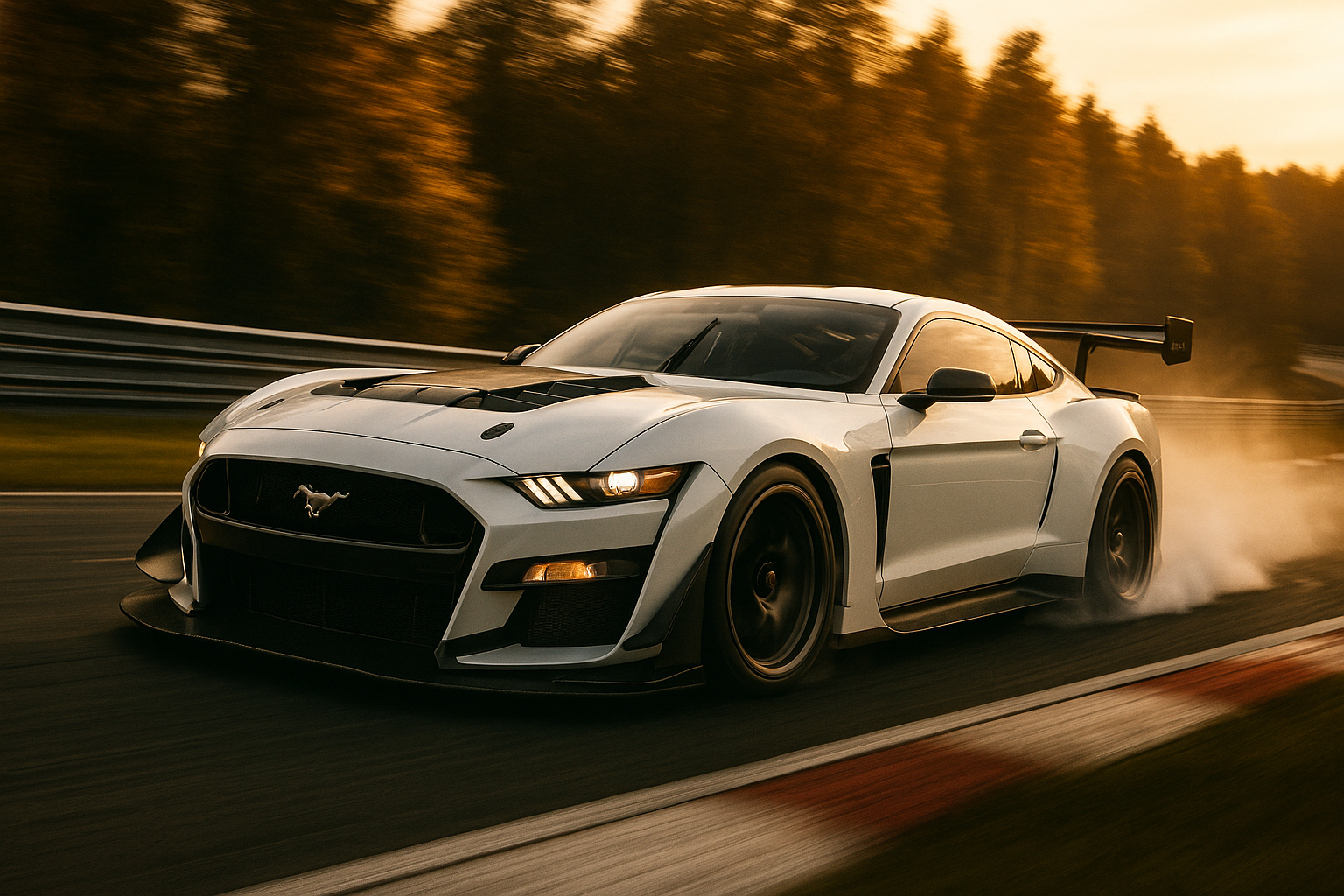
General Motors just shattered expectations with the 2025 Chevrolet Corvette ZR1, confirming what enthusiasts hoped for but barely dared believe: America’s supercar has officially eclipsed 233 miles per hour in factory trim. This isn’t some one-off experiment or specially prepped test mule—this is a production-spec Corvette ZR1 that buyers can actually order, making it the fastest factory Corvette in the nameplate’s 70-year history.
The achievement positions the Corvette ZR1 among an elite group of hypercars capable of breaching the 230-mph threshold, a club traditionally reserved for seven-figure exotics from Bugatti, Koenigsegg, and Pagani. Yet Chevrolet is delivering this performance at a fraction of the cost, fundamentally disrupting the supercar hierarchy.
Twin-Turbo V8 Unleashes 1,064 Horsepower
The astronomical top speed comes courtesy of an all-new twin-turbocharged 5.5-liter flat-plane crank V8 dubbed the LT7. This powerplant generates a staggering 1,064 horsepower and 828 lb-ft of torque—figures that dwarf the outgoing Z06’s naturally aspirated output.
Unlike the Z06’s screaming redline character, the ZR1’s forced-induction setup delivers massive torque across the entire rev range. The twin-turbo configuration uses dual intercoolers positioned strategically within the Corvette’s mid-engine architecture, feeding cool, dense air into the combustion chambers.
Chevrolet partnered with ATP Automotive Testing Papenburg in Germany to validate the top speed claim. The 7.4-mile high-speed oval provided the perfect environment for the ZR1 to stretch its legs, with engineers documenting multiple runs exceeding 233 mph using GPS-verified telemetry.
Aerodynamics and Downforce Engineering
Achieving 233 mph requires more than brute horsepower—it demands aerodynamic sophistication. The Corvette ZR1 features extensive carbon fiber bodywork, including:
- Split rear wing with adjustable angles for high-speed stability or maximum downforce
- Aggressive front splitter with dive planes channeling air around the chassis
- Functional hood louvers reducing front-end lift
- Rear diffuser maximizing ground-effect aerodynamics
- Carbon ceramic brake cooling ducts integrated into the body panels
The ZR1 can generate up to 1,200 pounds of downforce in maximum attack mode, though the record-setting top speed runs utilized a low-drag configuration that prioritizes velocity over grip. This adjustability gives owners genuine versatility—canyon carving one day, autobahn storming the next.
Tire Technology Meets the Challenge
Michelin developed bespoke Pilot Sport 4S tires specifically rated for the ZR1’s extreme velocity envelope. These aren’t off-the-shelf rubber; they feature reinforced sidewalls and specialized compound formulations that maintain structural integrity beyond 230 mph while still delivering acceptable wet and dry grip for road use.
How the Corvette ZR1 Compares to Rivals
At an expected base price around $170,000-$180,000, the Corvette ZR1 delivers hypercar performance at supercar money. For context, the Porsche 911 Turbo S tops out around 205 mph, while the Ferrari SF90 reaches approximately 211 mph—both commanding prices north of $500,000 when optioned appropriately.
The ZR1’s closest domestic rival, the upcoming Dodge Viper’s spiritual successor, remains in development limbo. Meanwhile, European manufacturers are pivoting toward hybridization and electrification, leaving traditional high-displacement engines increasingly rare.
Production Timeline and Availability
Chevrolet confirms the 2025 Corvette ZR1 enters production this spring at the Bowling Green Assembly plant in Kentucky. Initial allocations are predictably tight, with dealers reporting waitlists stretching into 2026 despite the car not yet hitting showrooms.
The automaker hasn’t disclosed production caps, but historical ZR1 models have been relatively limited compared to base Stingray volumes. Expect specialty colors, carbon fiber packages, and track-focused options to push well-equipped examples past $200,000.
What This Means for American Performance
The Corvette ZR1’s 233-mph achievement represents more than bragging rights. It signals that American engineering can compete head-to-head with European exotics without apology or compromise. The days of dismissing domestic performance as straight-line muscle are definitively over.
As electrification reshapes the automotive landscape, the ZR1 might represent the zenith of internal combustion performance from Detroit. Chevrolet has hinted at electrified Corvette variants down the road, but for now, the twin-turbo V8 ZR1 stands as a defiant celebration of traditional supercar philosophy.
For enthusiasts watching manufacturers abandon big engines and manual transmissions, the Corvette ZR1 arrives as a reminder that combustion passion isn’t quite extinct—it just reached 233 miles per hour.