The era of American muscle officially closed its doors as the last Dodge Challenger and Charger rolled off the Brampton Assembly Plant production line in December 2023, marking the end of a 15-year run that defined modern muscle car culture. Now, those final edition models are commanding staggering prices at auction, with some units exceeding $200,000—nearly triple their original sticker price.
This isn’t just nostalgia talking. The collectible car market has erupted for these final Hellcat-powered beasts, and the numbers prove it. What makes these last-generation muscle cars so valuable, and what does their departure mean for performance enthusiasts moving forward?
The Final Roar: Last Call Models Command Premium Prices
Dodge’s “Last Call” special editions have become instant collectibles. The limited production numbers combined with supercharged V8 power created a perfect storm for collector demand.
Recent auction results tell the story:
- 2023 Dodge Challenger SRT Demon 170: Selling between $175,000-$225,000 (original MSRP: $96,666)
- 2023 Dodge Charger King Daytona: Fetching $150,000-$180,000 (original MSRP: $96,475)
- 2023 Dodge Challenger Black Ghost: Commanding $130,000-$165,000 (original MSRP: $96,370)
The Demon 170 holds particular significance as the most powerful factory production muscle car ever built, producing 1,025 horsepower on E85 fuel. Only 3,300 units were manufactured, making it instantly rare.
Why Collectors Are Paying Double for Dodge Muscle Cars
Several factors drive these unprecedented valuations. First, the shift to electrification means V8-powered muscle cars are effectively extinct in new vehicle lineups. The replacement Dodge Charger Daytona uses a twin-turbocharged inline-six or electric powertrains—no V8 option exists.
Second, emissions regulations have made naturally aspirated and supercharged V8 engines increasingly difficult to certify for sale. European markets already face severe restrictions, and US regulations continue tightening.
Third, these final editions represent peak internal combustion performance. The Demon 170’s quarter-mile time of 8.91 seconds at 151 mph remains unmatched by any production car under $100,000.
The Collector Psychology Behind Six-Figure Muscle Cars
Industry analysts compare the current Challenger and Charger market to the original 1960s and 1970s muscle car boom. Those vehicles also faced extinction due to insurance costs and fuel economy regulations, creating rarity that drove values skyward decades later.
Unlike those classics, however, modern Challengers and Chargers offer reliability, daily drivability, and warranty coverage—assuming buyers can resist the urge to actually drive them. Many final edition owners are keeping odometers under 100 miles to preserve investment value.
What Replaces the Legendary HEMI V8?
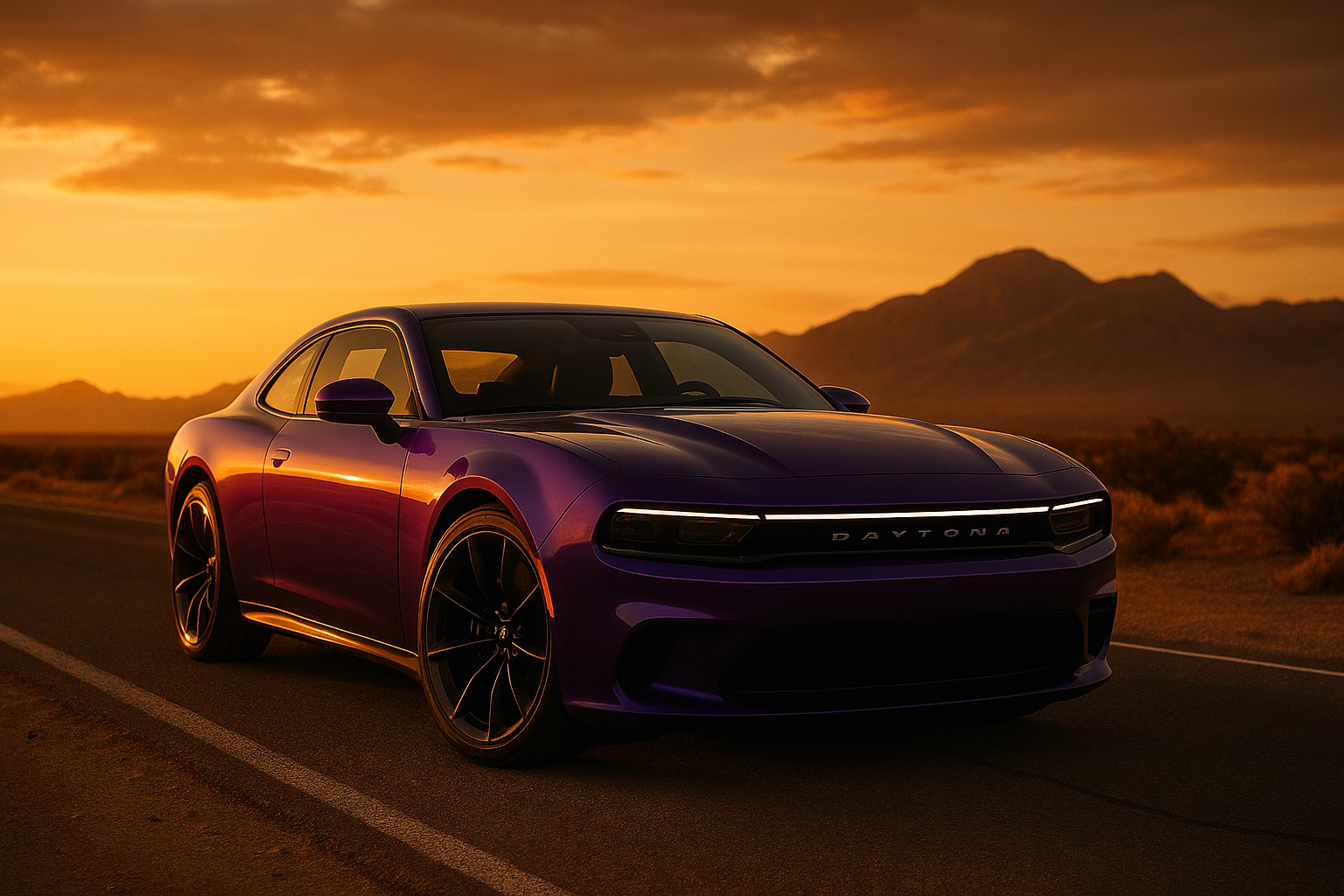
Dodge isn’t abandoning performance entirely. The 2024 Dodge Charger Daytona Scat Pack uses a 3.0-liter twin-turbo inline-six producing 550 horsepower—impressive, but lacking the visceral V8 soundtrack enthusiasts crave.
The all-electric Charger Daytona arrives with two powertrains:
- Standard: 456 horsepower, 4.7-second 0-60 mph
- Scat Pack: 670 horsepower, 3.3-second 0-60 mph
Dodge claims the electric version will offer comparable performance to Hellcat models, with the added benefit of instant torque delivery. The company even engineered a “Fratzonic Chambered Exhaust” system that produces artificial engine noise reaching 126 decibels.
But can simulated sound replace authentic V8 rumble? Early reviews suggest skepticism among traditional muscle car buyers.
Investment Potential or Speculative Bubble?
Market experts remain divided on long-term value retention. Hagerty Insurance’s valuation tools show appreciation curves similar to other limited-production performance cars, but warn that speculation could inflate prices beyond sustainable levels.
The key differentiator: actual rarity. Unlike artificially limited “special editions” that manufacturers produce in thousands of units, genuine supply constraints exist for final-year Hellcat models due to production cessation.
The Future of American Muscle
The Challenger and Charger’s departure signals a broader industry transformation. Ford already discontinued the Mustang Shelby GT500 supercharged V8, replacing it with the Dark Horse’s naturally aspirated 5.0-liter V8. Chevrolet continues the Camaro’s hiatus with no confirmed replacement.
For enthusiasts, the message is clear: V8-powered performance cars are entering their final chapter. Whether electric successors can capture the same emotional connection remains the industry’s biggest question.
As auction prices continue climbing for these final Dodge muscle cars, one thing is certain—the sound of a supercharged HEMI at full throttle has become a six-figure experience.