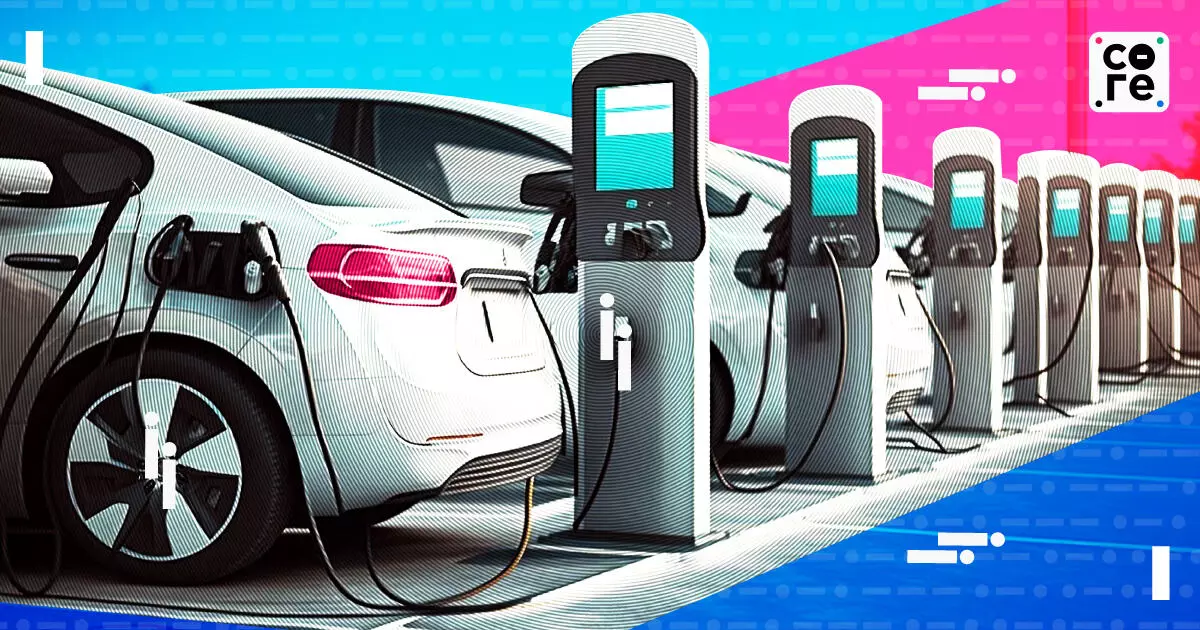
The next wave of EV fast-chargers isn’t coming to highway rest stops—it’s showing up where you buy groceries, grab coffee, and return those jeans that didn’t fit. Retail parking lots are quickly becoming the new battleground for charging infrastructure, and honestly, it makes a lot of sense when you think about how people actually live their lives.
For years, the charging conversation focused almost entirely on long-distance travel. Highway corridors got the attention, the funding, and the splashy ribbon-cutting ceremonies. But here’s the thing: most EV owners aren’t road-tripping every weekend. They’re running errands. They’re killing time at Target while their kid finishes soccer practice. They’re grabbing lunch. The highway charger solves a problem that only comes up a few times a year for most drivers.
Walmart announced plans late last year to install fast-chargers at thousands of U.S. locations by 2030. Target, Meijer, and Kroger are doing the same. Even Starbucks—yes, the coffee chain—has been quietly partnering with Volvo to add chargers at select drive-thru locations along certain routes. The logic is simple enough. A 20-minute fast-charge session is awkward at a highway rest stop where there’s nothing but vending machines and questionable bathrooms. But 20 minutes at a grocery store? That’s basically a quick shopping trip. You come out with milk, eggs, and 80 more miles of range. Everyone wins.
“We’re not asking people to change their behavior,” said Marcus Chen, VP of operations at ChargeReady, a network operator partnering with several national retailers. “We’re putting chargers where people already spend time. That’s the unlock.”
According to recent data from the Department of Energy, retail-located chargers see roughly 40 percent higher utilization rates than their highway counterparts. Part of that is simple math—more people visit a Costco parking lot on a Saturday than a random exit off I-70. There’s also the dwell-time factor. Shoppers tend to stay 30 to 45 minutes on average, which lines up almost perfectly with modern fast-charging speeds. Most newer EVs can add 100 miles or more in that window, assuming the charger is working properly. That’s still a big assumption, but more on that in a moment.
Retailers benefit too, obviously. Studies suggest EV drivers spend more per visit when charging is available—something about feeling good about the stop, or maybe just having extra time to wander the aisles and throw things in the cart you didn’t need. Either way, stores are treating chargers less like a public service and more like a customer-acquisition tool.
Of course, there are complications. Some shoppers without EVs grumble about prime parking spots being reserved for chargers. I watched a guy in a lifted Ram get genuinely upset about this at a Home Depot outside of Austin last month. He had a point, sort of—the chargers were right up front, closer than the handicap spaces. Retailers are experimenting with placement. Some put chargers at the far edges of lots, betting that EV drivers will walk a little farther. Others are installing them mid-lot, near cart returns, trying to balance visibility with fairness. There’s no consensus yet on what works best.
Then there’s the reliability problem, which hasn’t gone away just because the chargers moved from highway exits to shopping centers. Broken screens, payment failures, cables that won’t release—these headaches follow the hardware wherever it goes. ChargeReady claims 97 percent uptime on its network, but talk to actual EV owners and the stories get messier. I’ve personally stood next to a charger displaying a cheerful green “available” light that absolutely refused to start a session. Twice.
The big question now is whether retail charging can scale fast enough to matter. EVs account for roughly 9 percent of new vehicle sales in the U.S., and that number keeps climbing even with the political winds shifting around. More EVs mean more demand for convenient charging, and convenient increasingly means where I was going anyway.
Some analysts predict that by 2030, retail parking lots will host more public fast-chargers than highway corridors and standalone charging stations combined. That sounds aggressive, but look at the investment dollars flowing in and it starts to feel plausible. For now, the shift is gradual but unmistakable. Next time you’re wandering the aisles at Trader Joe’s, trying to remember if you need more frozen orange chicken, your car might be quietly gaining range out in the lot. That’s the future, apparently. Charging while shopping. Could be worse.