Jim Farley, the CEO of Ford Motor Company, has cautioned that the existing policy of electric vehicle (EV) in the European Union is threatening the auto industry in the region. He makes this statement a few days before the European Commission is supposed to release new set of environmental regulations.
In an opinion piece published on Monday in the Financial Times, Farley said that strict EV sales targets are not working. He called for a new approach that focuses on actual buyer behavior rather than assumptions about demand. Farley said that EV sales are falling short of what regulators expected.
“European customers — both individuals and businesses — simply are not buying EVs in big numbers,” he wrote.
He pointed out that rules cannot force people to buy products they don’t want or can’t use.
Sales figures support his claim. Ford’s electric vehicle sales have dropped sharply in recent months. In November, Ford sold only 1,006 F-150 Lightnings — a 72% drop. The Mustang Mach-E also saw a 49% decline in sales compared to last year.
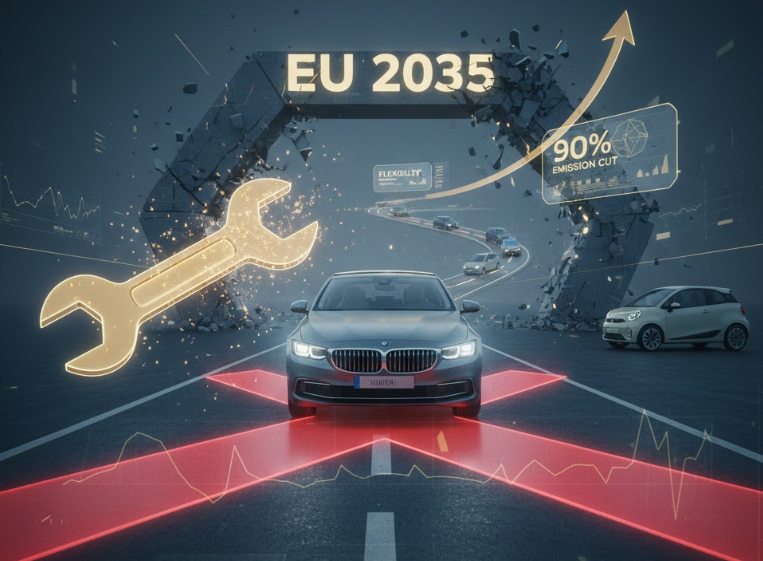
Despite this, the EU still plans to cut fleetwide CO2 emissions by 55% by 2030 and stop the sale of new petrol and diesel cars by 2035.
Ford and Stellantis Raise Concerns Over EU Regulations
Farley is not the only industry leader raising concerns. Stellantis Chairman John Elkann also commented on the EU’s policy direction. He said the auto industry has submitted its own proposals to help shape new laws but warned that current plans could do more harm than good.
“If the current path continues, the European auto industry faces irreversible decline,” Elkann stated.
Both companies argue that there needs to be a more flexible and realistic timeline. They are asking regulators to set goals that better reflect how fast the public is willing to switch to EVs.
According to Ford’s internal data, the company’s EV division, Model e, has lost $3.6 billion so far in 2025, after losing $5.1 billion in 2024.
Industry Fears Growing Threat from Chinese EV Makers
Farley also warned that current EU rules are helping foreign competitors. He said Chinese EV makers, backed by state support, are gaining ground in Europe. In just 12 months, their market share doubled to 5.5% as of August.
At the same time, the European auto sector is still struggling to recover from the effects of the pandemic. The region lost 90,000 jobs in 2024, and car production is still 3 million units below pre-2020 levels.
Automakers Call for Support, Not Just Rules
Farley urged European governments to do more to support EV adoption. He said more charging stations are needed outside of large cities and that buyers need better incentives.
“Governments must match the industry’s investment with consistent support to help people make the switch,” he wrote.
He also criticized how commercial vehicles are being regulated. Farley said current tax rules treat work vans the same as luxury cars, which puts pressure on small businesses.
“These are tools for plumbers, florists and builders,” he said. “Penalizing them is unfair when these businesses make up more than half of Europe’s economy.”
Farley also pointed to mixed messages from the UK government, which recently introduced a new per-mile tax for EVs while still offering a purchase discount.
“One foot on the gas, one on the brake — these contradictions leave buyers confused,” he said.
The European commission will publish its new rules regarding climate on Wednesday, December 10. A new structure is being anticipated to take into account the market environment and production realities by automakers.