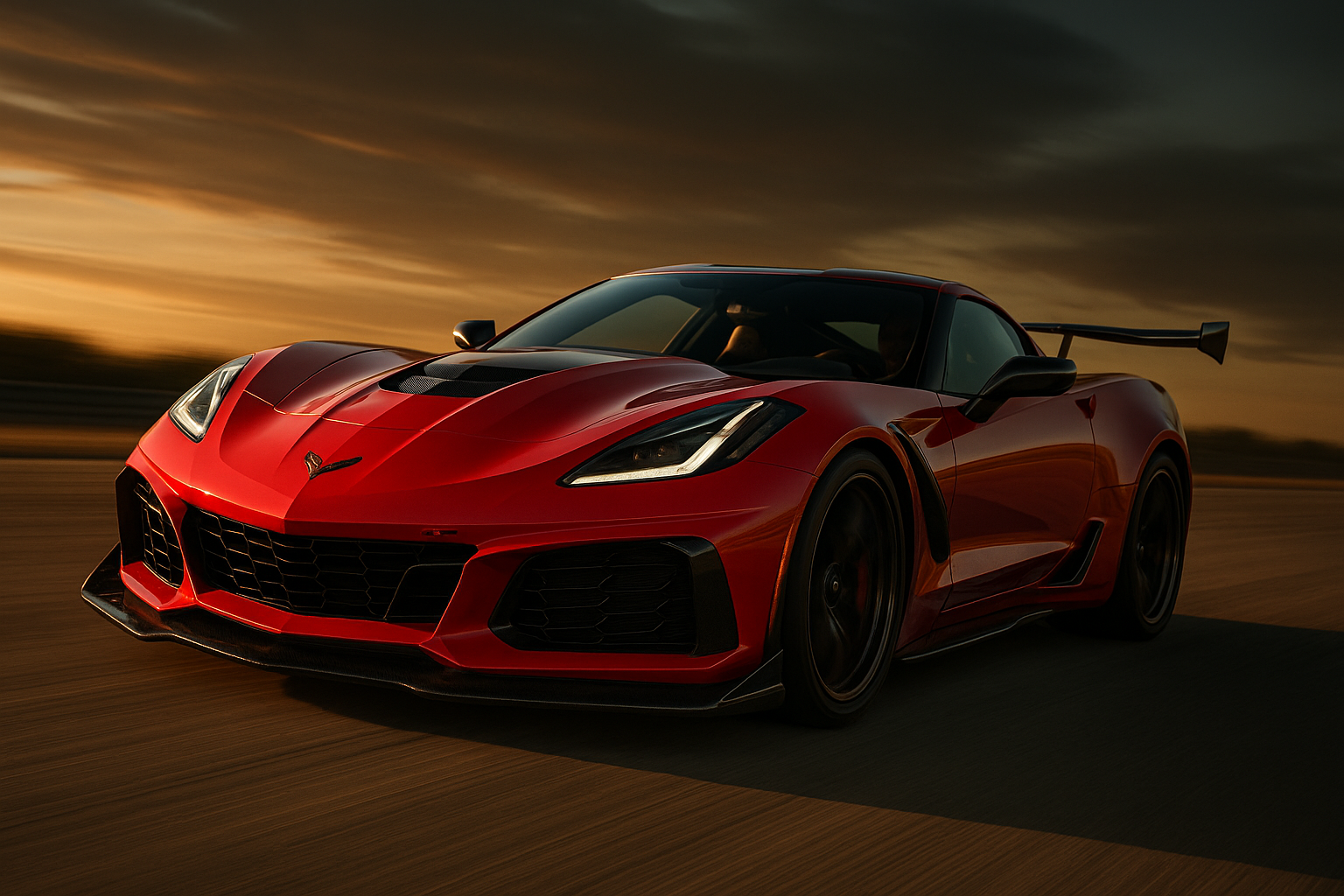
Ford has just shattered expectations at the Nürburgring Nordschleife, piloting the all-new Mustang GTD to a blistering 6:57.685 lap time—making it the fastest American production car to ever tackle the legendary 12.9-mile German circuit. This isn’t just a milestone for the Blue Oval; it’s a statement that American muscle has officially entered the supercar arena.
Ford Mustang GTD Conquers the Green Hell
The Mustang GTD’s sub-seven-minute lap time places it in rarified air, competing directly with European exotics that cost twice as much. Driven by professional racing driver Dirk Müller, the GTD completed its record run under optimal track conditions, validated by independent timekeepers.
For context, this lap time positions the Mustang GTD ahead of the Porsche 911 GT2 RS (6:47.3) in the accessibility stakes—though not quite matching its raw speed—while absolutely demolishing previous American production car records. The Chevrolet Corvette Z06 previously held bragging rights among Detroit iron with a 7:10.6 time.
What Makes the Mustang GTD So Fast?
Ford didn’t just slap wider tires on a regular Mustang and call it a day. The GTD represents a ground-up engineering exercise focused on one goal: track domination.
- Supercharged 5.2L V8: Producing over 800 horsepower, this hand-built engine breathes through a dry-sump oiling system
- Active Aerodynamics: Computer-controlled rear wing and front splitter adjust in real-time for maximum downforce or reduced drag
- Semi-Active Suspension: Adaptive dampers respond within milliseconds to track surface changes
- Carbon Fiber Construction: Extensive use of lightweight materials throughout the chassis and body panels
- Ceramic Matrix Composite Brakes: Fade-resistant stopping power lap after lap
The $300,000 Question: Is It Worth It?
With a sticker price approaching $325,000, the Mustang GTD costs nearly four times what a standard Mustang Dark Horse commands. That’s Porsche 911 Turbo S territory, and buyers will inevitably make comparisons.
But Ford isn’t targeting traditional Mustang buyers with the GTD. This car exists to prove that American engineering can compete with—and beat—Europe’s best on their home turf. It’s a halo product designed to elevate the entire Mustang brand.
Production numbers remain deliberately limited, with Ford hand-assembling each GTD at a specialized facility. The exclusivity factor alone justifies the premium for collectors and track enthusiasts willing to write the check.
How It Stacks Against European Competition
The Nürburgring has long been Europe’s preferred proving ground, where manufacturers settle scores and validate engineering claims. The Mustang GTD’s 6:57.685 puts it within striking distance of some serious hardware:
- Lamborghini Aventador SVJ: 6:44.97
- Porsche 911 GT2 RS: 6:47.3
- Mercedes-AMG GT Black Series: 6:48.047
- Ford Mustang GTD: 6:57.685
While not the outright fastest, the GTD’s performance is remarkable considering it maintains street-legal emissions equipment and retains more daily-driving civility than purpose-built track specials.
Engineering Philosophy Behind the Time
Ford’s engineers spent thousands of hours in computational fluid dynamics simulations and real-world testing to optimize every aerodynamic surface. The result is a car generating over 1,000 pounds of downforce at high speed without sacrificing straight-line velocity.
The transmission—a transaxle-mounted eight-speed dual-clutch unit—helps achieve near-perfect 50/50 weight distribution. This layout, borrowed from racing applications, improves handling balance and allows drivers to exploit the available grip more effectively through the Nordschleife’s elevation changes and off-camber corners.
What This Means for Performance Car Enthusiasts
The Mustang GTD’s Nürburgring achievement signals a broader shift in American automotive engineering priorities. Gone are the days when domestic performance cars excelled only in straight-line acceleration while struggling through corners.
This matters because it pushes competition forward. Chevrolet will undoubtedly respond with the next-generation Corvette Z06 or ZR1. Dodge’s future electric muscle cars must now justify their existence against benchmarks like this.
For consumers, even those who’ll never track their cars, these technological advancements eventually trickle down to mainstream models. The suspension tuning, aerodynamic lessons, and materials science learned developing the GTD will influence future Mustang generations.
Looking Ahead
Ford’s Mustang GTD has accomplished what many thought impossible just a decade ago—an American muscle car running with European supercars on the world’s most demanding circuit. As production deliveries begin throughout 2024 and 2025, owner lap times will reveal whether civilian drivers can approach Dirk Müller’s professional pace.
The real question now: which manufacturer attempts to reclaim the American production car record next? The performance war just entered a new chapter, and enthusiasts worldwide are the winners.