Stellantis owns roughly a 20 percent stake in Leapmotor and has formed a joint venture called Leapmotor International to sell vehicles outside China. The partnership means Stellantis has access to minivan and SUV technology that far exceeds anything currently offered under its Chrysler, Dodge, or RAM brands in North America.
According to manufacturer claims, the D99 BEV pairs a 115 kWh CATL battery with up to approximately 720 kilometers (447 miles) of range. The vehicle is built on a 1000-volt architecture, one of the highest-voltage platforms in production today. Higher voltage systems enable faster charging speeds and reduce energy losses during transmission, improving overall efficiency.
The D99 EREV (extended-range electric vehicle) uses an 80.3 kWh battery with a claimed approximately 500 kilometers (311 miles) of electric range. Leapmotor claims this makes the D99 “the world’s longest-range extended-range MPV on battery power.” Built on an 800-volt platform, this version pairs the battery with a small-displacement gasoline engine acting solely as a generator, though Leapmotor has not released detailed specifications for the range extender.
That 80.3 kWh battery is the largest in any hybrid vehicle currently on the market based on manufacturer-claimed figures. The Leapmotor D99 EREV carries 80.3 kWh, compared to 70 kWh for the Zeekr 9X EREV and 63.3 kWh for the upcoming Xpeng X9 EREV.
By comparison, the Chrysler Pacifica Plug-in Hybrid offers a 16 kWh battery and approximately 32 miles of electric range. The D99’s EREV battery is five times larger and delivers nearly ten times the electric driving range.
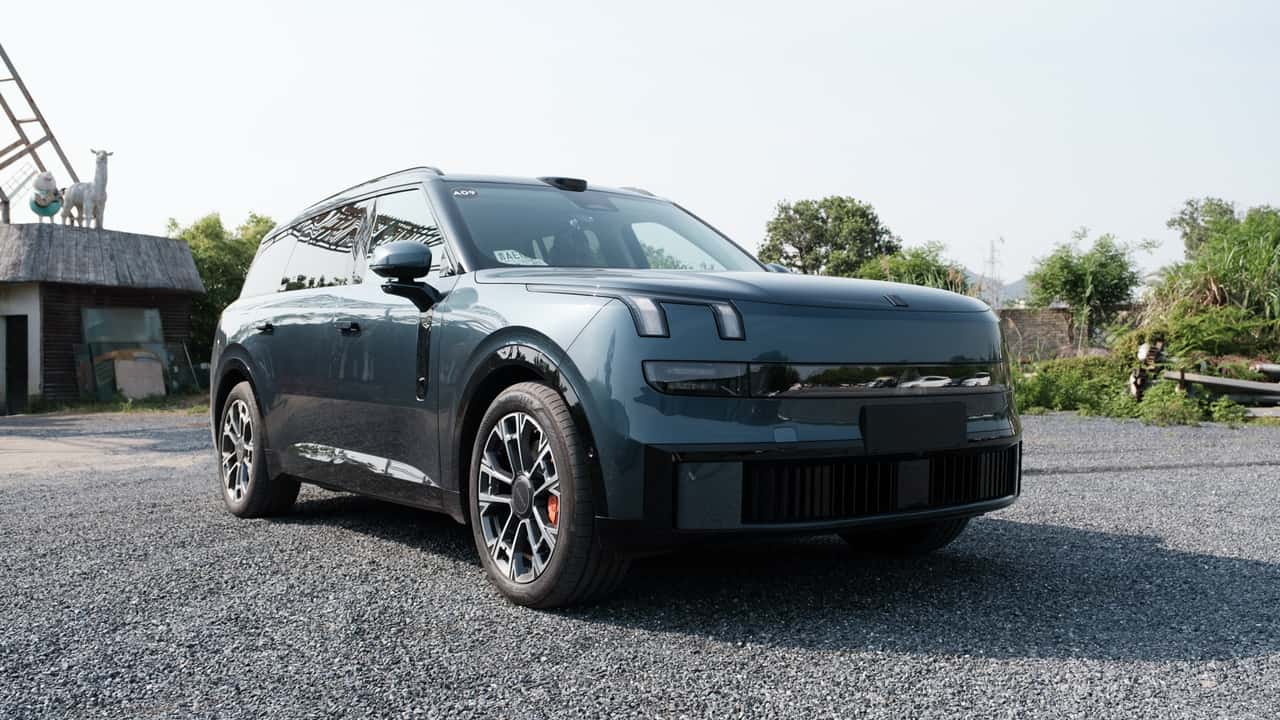
The D19 SUV offers the same dual-powertrain strategy. According to manufacturer claims, the D19 BEV features a 115 kWh battery pack delivering up to 720 kilometers of range, while the D19 EREV utilizes the same 80.3 kWh battery pack, the largest ever fitted to an EREV in the Chinese market, delivering up to 500 kilometers of pure electric range. The D19 will come in six-seat and seven-seat configurations.
The D99 is a genuine full-size MPV measuring over 5.2 meters (approximately 204 inches) in length, just under 2 meters (78.7 inches) in width, with a wheelbase exceeding 3.1 meters (122 inches). For American context, that’s roughly the same length as a Chrysler Pacifica but with a longer wheelbase, translating to more interior space for passengers and cargo.
The D99 follows Leapmotor’s design philosophy of simple, flowing lines without unnecessary complexity. The front end features an extremely short nose section with the windshield stretching beyond the front axle, a configuration that should provide exceptional forward visibility. Other design details include retractable door handles (now being phased out by Chinese regulators for safety reasons), darkened B- and C-pillars that create a floating roof effect, and a full-width LED light bar at the rear.
The D99 boasts a body torsional stiffness rating of 46,682 Nm/deg, which should translate to reduced noise and vibration and a solid, planted feel on the road. The vehicle also incorporates a dual-wheel puncture stability system, addressing one of the unique challenges of heavy electric vehicles by helping maintain control and stability in tire failure scenarios.
Leapmotor has showcased a platform-level ADAS architecture built around dual Qualcomm Snapdragon Ride 8797 chips delivering up to 1,280 TOPS (trillion operations per second) of computational power, which is expected to underpin future flagship models including the D99. The system supports VLA (Visual-Language-Action) large language models, meaning the AI can potentially understand natural language commands, interpret visual information from cameras, and take appropriate actions.
Interior details remain limited, though Leapmotor has confirmed a focus on high-definition displays and comfort-oriented seating. The D99 is being positioned both as a family vehicle and as a chauffeur-driven option for business use.
The D99 and D19 join an already substantial Leapmotor lineup that currently includes the T03, B10, B01, C01, C10, C11, C16, and Lafa 5, covering compact EVs, sedans, and SUVs across multiple market segments in China. The D series represents Leapmotor’s push into premium territory.
In China, the D99 enters a crowded field of premium electric and extended-range MPVs including the Xpeng X9, Zeekr 009, Li Auto Mega, and Geely Galaxy V900. All of these vehicles offer significantly more electric range, advanced technology, and luxury features than any minivan currently available in the United States. American families looking for an electrified family hauler have exactly one option: the Chrysler Pacifica Plug-in Hybrid.
Stellantis pioneered the modern minivan segment with the Dodge Caravan and Plymouth Voyager in 1984. For decades, Chrysler minivans were the default choice for American families. Today, the Chrysler Pacifica is the only minivan Stellantis sells in the U.S., and the plug-in hybrid version launched in 2017 with battery technology that has seen only minor updates since.
Despite Stellantis’ access to Leapmotor’s EREV and BEV technology through its ownership stake, no plans currently exist to introduce these vehicles to the U.S. market. Current tariff policies on Chinese-manufactured vehicles make direct imports economically challenging. European availability through Leapmotor International is possible, but no confirmation has been given for the D99 or D19.
With the D19 SUV launching in April 2026 and the D99 MPV expected to follow, Leapmotor will have two vehicles in its D series offering technology that exceeds anything available from Stellantis brands in America. The technology gap between what’s available in China and what’s offered in the United States continues to widen.
Based on competitive positioning in China, pricing for the D99 is expected to fall in the 300,000 to 400,000 yuan range (approximately $42,000 to $56,000), though Leapmotor has not confirmed final pricing or a specific launch date.