Key Facts
- Hyundai union members voted to authorize strike over humanoid robot deployment in South Korean factories
- Union demands formal role in automation decisions before robots are deployed on production lines
- Management says robots will handle repetitive and hazardous tasks, not replace workers entirely
- First major automotive labor dispute specifically targeting humanoid robots as Tesla, BMW, Mercedes expand similar programs
Workers at Hyundai’s South Korean plants have voted to authorize strike action over concerns that humanoid robots could threaten their jobs, marking the first major automotive union to take such a step. The dispute centers specifically on advanced humanoid robots rather than traditional industrial automation, as the automaker accelerates factory modernization amid competition from Chinese manufacturers.
Union Demands Role in Automation Decisions
According to industry reports from OICA, the union representing Hyundai’s South Korean workforce wants a formal role in automation decisions before robots are deployed on production lines. The strike authorization gives union leadership the mandate to call a work stoppage if negotiations with management fail to produce an agreement on oversight mechanisms.
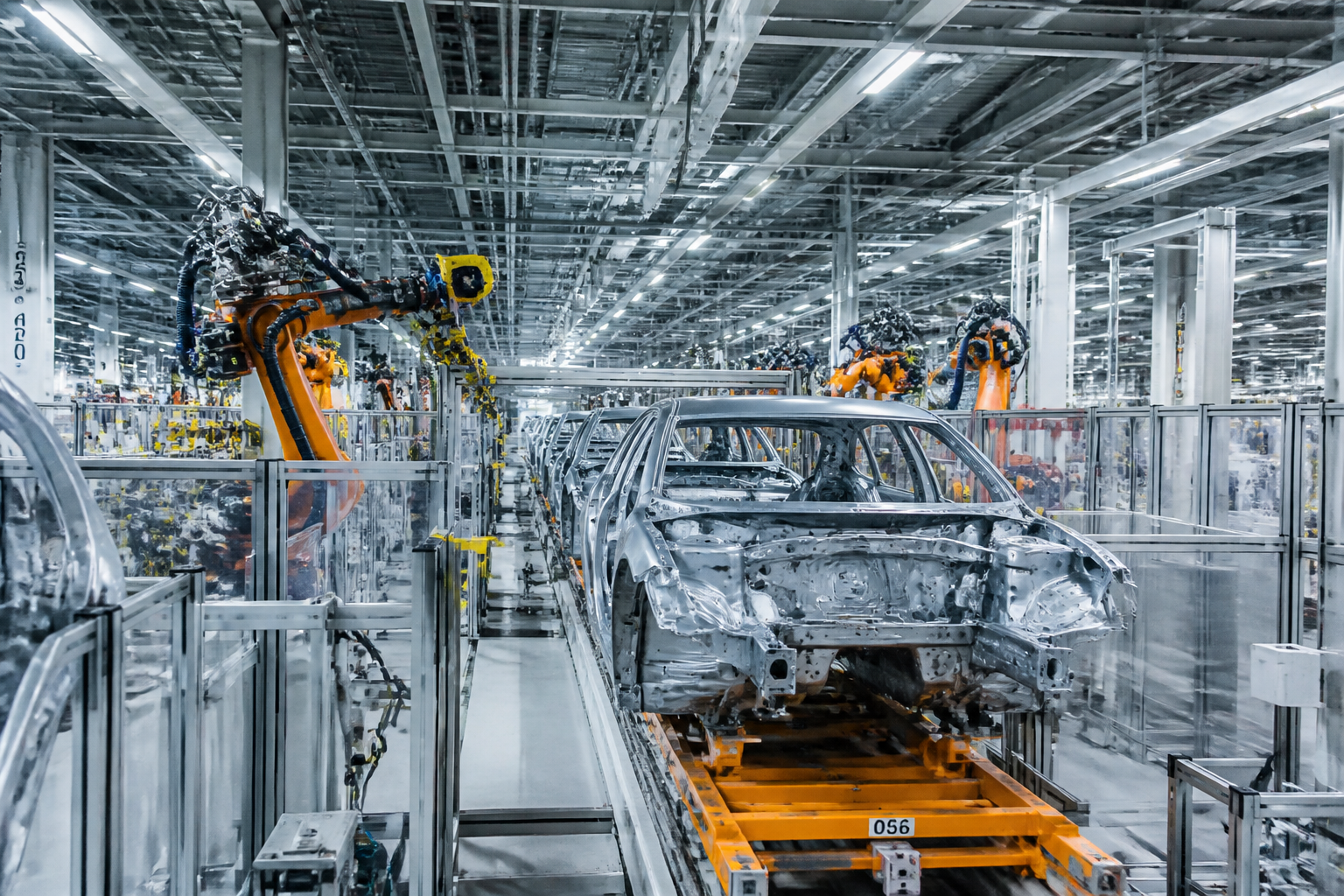
The labor dispute comes as Hyundai accelerates factory automation to remain competitive with Chinese automakers who have rapidly scaled up production capacity and efficiency. Unlike previous automation debates that focused on robotic arms and assembly line machinery, this conflict specifically targets humanoid robots—machines designed to move and work in human-like ways.
Management Position on Robot Deployment
Hyundai management has stated that robots will handle repetitive and hazardous tasks rather than replace workers entirely, according to OICA summaries of the dispute. The company argues that automation will improve workplace safety by removing humans from dangerous environments while allowing the workforce to focus on higher-skill tasks requiring judgment and flexibility.
The automaker has not publicly detailed which specific tasks would be assigned to humanoid robots or provided timelines for deployment. This lack of transparency appears to be a central point of contention for union representatives, who argue that workers deserve input into decisions that will reshape their daily responsibilities and long-term employment prospects.
First Humanoid Robot Labor Dispute in Auto Industry
The Hyundai strike authorization represents the first major automotive union action specifically targeting humanoid robot deployment, according to Financial Times reporting cited by OICA. This distinction matters because humanoid robots represent a step change from traditional industrial automation—they can potentially perform a far wider range of tasks and adapt to different jobs with software updates rather than physical reconfiguration.
Several global automakers have announced humanoid robot programs in recent months. Tesla has been developing its Optimus humanoid robot with plans for factory deployment, while BMW and Mercedes-Benz have partnered with robotics companies to test humanoid units in European plants. The Hyundai labor dispute may signal broader tensions as these programs expand from pilot projects to production-scale implementation.
Global Implications for Automotive Labor
The South Korean strike authorization carries implications beyond Hyundai’s home market. Automakers in the United States and Europe face similar pressures to automate amid intense competition, supply chain challenges, and labor shortages in some markets. However, they also contend with powerful unions that have historically resisted workforce reductions.
United Auto Workers in the United States and IG Metall in Germany have both raised concerns about automation and job security in recent contract negotiations, though neither has specifically addressed humanoid robots to date. The Hyundai dispute may provide a template for how unions approach negotiations as humanoid robot technology matures and becomes economically viable for large-scale deployment.
The timing of the labor action coincides with intensifying competition from Chinese automakers, who have built massive manufacturing capacity and are expanding globally. Chinese manufacturers have embraced automation aggressively, creating pressure on legacy automakers to match their efficiency and cost structures or risk losing market share.
What This Means for Buyers
A prolonged strike at Hyundai’s South Korean plants could disrupt production of popular models including the Ioniq electric vehicle lineup, Tucson crossover, and Genesis luxury vehicles. South Korea serves as a major manufacturing hub for Hyundai’s global operations, and supply chain effects could ripple to markets worldwide.
Beyond immediate production concerns, the labor dispute highlights tensions that may affect long-term vehicle pricing and availability across the industry. If automation proceeds more slowly due to labor agreements, automakers may face higher production costs that get passed to consumers. Conversely, if automation accelerates without workforce input, labor disruptions could become more frequent, affecting vehicle supply and reliability of delivery timelines.
Buyers considering Hyundai or Genesis vehicles should monitor developments closely, particularly if the union moves from strike authorization to an actual work stoppage. Those in the market for 2026 or 2027 model-year vehicles may want to secure orders sooner rather than later if production disruptions appear likely.