Key Facts
- $3 billion investment in new Ohio manufacturing facility
- Plant will anchor Honda’s hybrid vehicle expansion strategy
- Represents significant capital commitment to U.S. manufacturing
- Positions Honda to compete directly with Toyota’s hybrid dominance
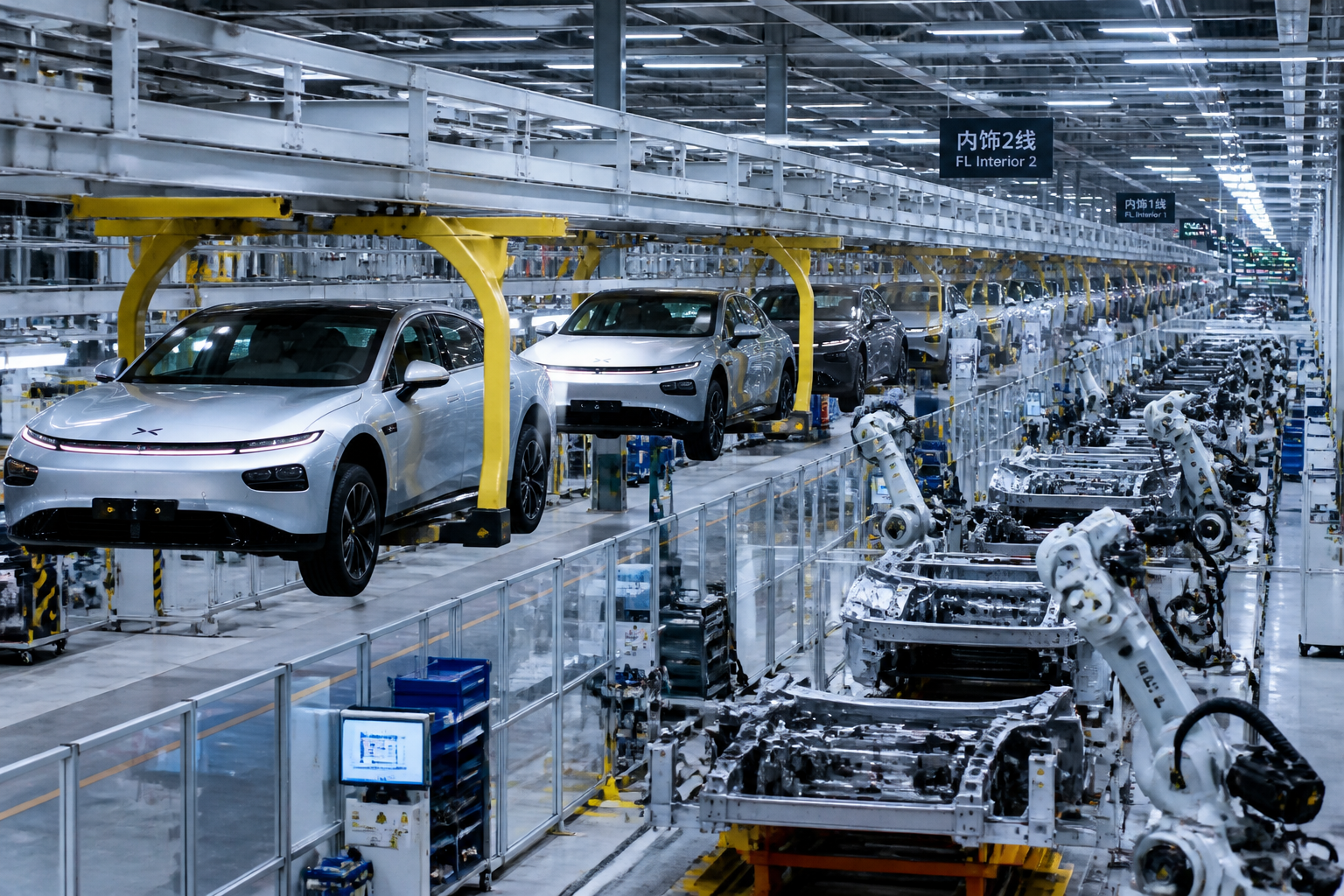
Honda has announced plans to construct a new $3 billion manufacturing facility in Ohio dedicated to hybrid vehicle production, marking one of the largest automotive investments in recent U.S. history. The Japanese automaker’s massive capital commitment signals a strategic pivot toward hybrid technology as consumer demand for electrified powertrains continues to reshape the global automotive landscape.
The new facility will spearhead Honda’s hybrid expansion strategy, positioning the company to capture growing market share in the electrified vehicle segment while hedging against the slower-than-expected adoption of pure battery-electric vehicles across key markets.
Strategic Shift Toward Hybrid Technology
Honda’s decision to invest heavily in hybrid manufacturing represents a notable recalibration of its electrification roadmap. While the company has previously emphasized battery-electric vehicle development, market realities in North America, Europe, and other Tier-1 markets have demonstrated persistent consumer preference for hybrid powertrains that eliminate range anxiety while delivering significant fuel economy improvements over conventional petrol engines.
This substantial capital investment in U.S. manufacturing also reflects Honda’s long-term commitment to American production, a strategy that has served the company well since establishing its first U.S. plant in Marysville, Ohio, in 1982. The state has since become Honda’s North American manufacturing heartland, with multiple facilities producing vehicles, engines, and transmissions.
Competitive Positioning Against Toyota
The Ohio expansion directly challenges Toyota’s decades-long dominance in hybrid technology. Since introducing the Prius in 1997, Toyota has sold millions of hybrid vehicles globally and currently offers hybrid variants across nearly its entire lineup. Honda, despite pioneering hybrid technology with the original Insight, has lagged behind its Japanese rival in hybrid market penetration.
Industry analysts view Honda’s $3 billion commitment as an acknowledgment that hybrid technology will remain commercially viable far longer than many automakers initially projected. While pure electric vehicles continue to grow in urban markets with robust charging infrastructure, hybrid powertrains offer a practical solution for buyers in regions where charging networks remain underdeveloped or where long-distance travel is routine.
Manufacturing and Economic Impact
The new Ohio facility is expected to create thousands of direct manufacturing jobs and generate substantial indirect employment through the supplier network. Honda has not yet disclosed the plant’s production capacity, construction timeline, or specific hybrid models that will be manufactured at the site.
The investment comes as automotive manufacturing in North America faces pressure from rising production costs, complex global supply chains, and evolving regulatory requirements for emissions and fuel economy. Honda’s decision to expand U.S. manufacturing capacity suggests confidence in long-term demand for hybrid vehicles in the North American market.
What This Means for Buyers
Honda’s hybrid manufacturing expansion should translate into increased model availability and potentially more competitive pricing as production scales up. Buyers in the U.S., Canada, and other markets can expect Honda to introduce hybrid variants across a broader range of its lineup, likely including popular models such as the Accord, CR-V, and Pilot that currently offer hybrid options in limited markets or trim levels.
The investment also signals Honda’s long-term commitment to hybrid technology, which should reassure prospective buyers concerned about parts availability, service support, and resale values. Unlike pure electric vehicles, which face questions about battery longevity and replacement costs, hybrid systems have proven reliable over decades of real-world use, with many examples exceeding 200,000 miles without major powertrain issues.
For buyers weighing hybrid versus battery-electric options, Honda’s manufacturing expansion validates hybrid technology as a mature, practical solution for reducing fuel consumption and emissions without the charging infrastructure requirements of pure EVs. The increased production capacity may also improve inventory availability, which has been a persistent challenge for popular hybrid models across the industry.
The Ohio facility’s focus on hybrid production rather than battery-electric manufacturing suggests Honda expects sustained demand for hybrid powertrains through at least the end of this decade, providing buyers with confidence that this technology will remain well-supported in the medium term.