Key Facts
- California’s new $3,500 EV rebate includes a $50,000 MSRP cap for most automakers, but waives it completely for California-headquartered EV-only manufacturers
- Rivian (Irvine HQ) and Lucid (Bay Area HQ) qualify for the exemption with vehicles starting around $58,000 and $71,000 respectively
- Tesla doesn’t qualify for the headquarters exemption after relocating its corporate HQ from California to Texas in 2021
- The $270 million program is part of a $600 million zero-emission vehicle package funded through Cap-and-Invest revenue
California Governor Gavin Newsom signed legislation on July 13, 2026, creating a $3,500 point-of-sale EV rebate that includes a controversial headquarters-based carve-out benefiting Rivian and Lucid while excluding Tesla. The new Senate Bill 168 waives the program’s $50,000 MSRP cap entirely for California-headquartered EV-only automakers, allowing Rivian and Lucid models priced above $58,000 to qualify while capping out Tesla’s lineup despite the company manufacturing hundreds of thousands of vehicles annually in Fremont.
The Headquarters Loophole
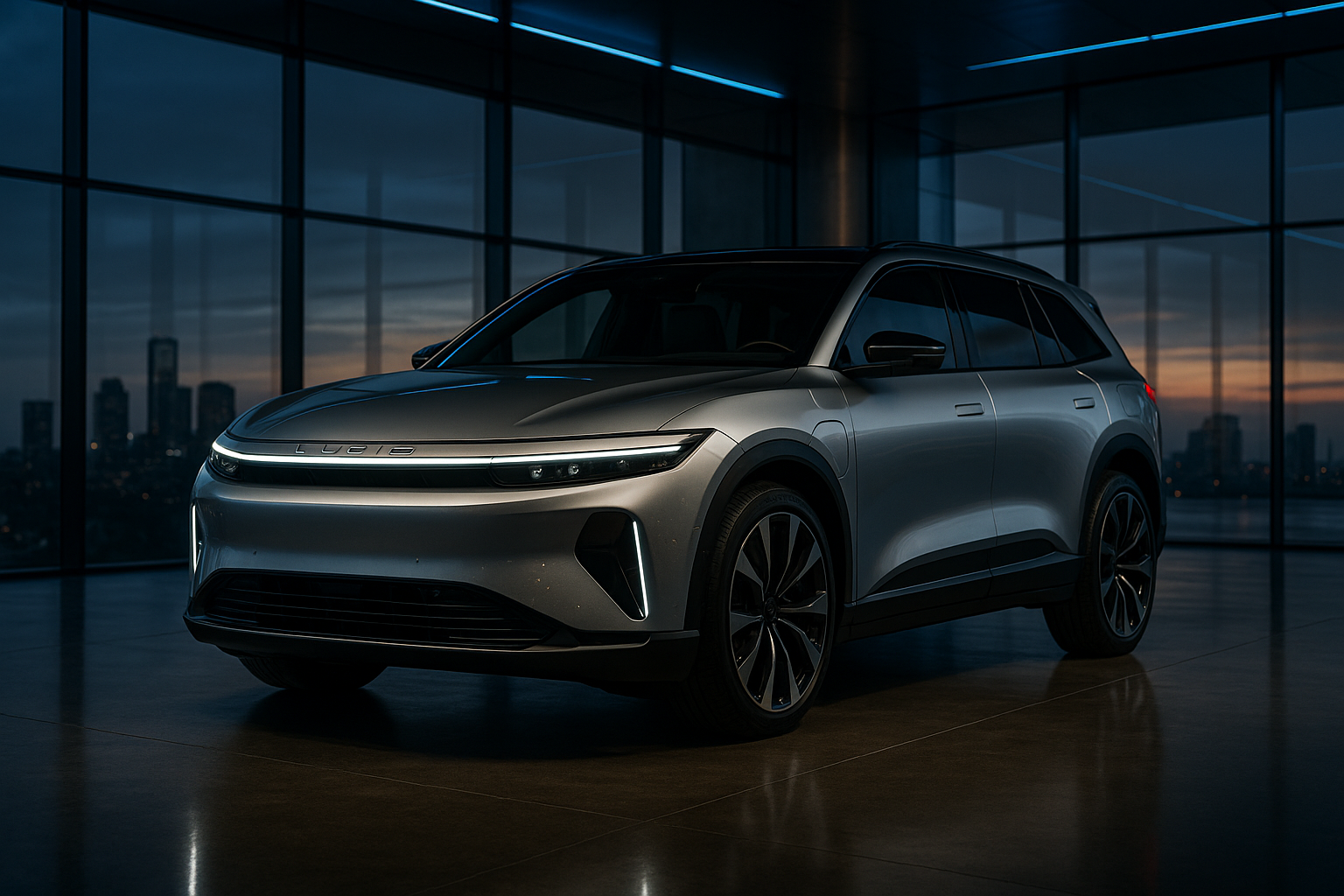
The legislation’s most contentious provision creates a bifurcated market structure in the nation’s largest EV market. According to Rivian Trackr’s analysis of the bill, the law waives the $50,000 price cap entirely for California-headquartered EV-only automakers. This exemption directly benefits Rivian, headquartered in Irvine, and Lucid, based in the Bay Area, whose cheapest models start around $58,000 and $71,000 respectively.
Tesla finds itself on the wrong side of this geographic divide. The company relocated its corporate headquarters from Palo Alto, California to Austin, Texas in 2021, a decision that now disqualifies it from the headquarters exemption even though Tesla still operates one of the state’s largest manufacturing facilities in Fremont, producing an estimated 600,000 vehicles annually.
The timing couldn’t be more significant for Rivian’s product launch strategy. Rivian’s R2 Performance Launch Edition at $57,990 and Premium at $53,990 both qualify for the full $3,500 rebate despite exceeding the threshold that applies to out-of-state manufacturers. This effectively gives Rivian a $3,500 pricing advantage over similarly-priced Tesla models in California showrooms.
Program Structure and Funding
The rebate program represents a $270 million investment combining $135.5 million in state funding matched dollar-for-dollar by participating automakers, according to Electrek’s coverage of the bill signing. The initiative forms part of a broader $600 million zero-emission vehicle package funded through California’s Cap-and-Invest revenue and smog-abatement fees.
The instant point-of-sale structure targets first-time EV buyers specifically, applying the $3,500 discount directly at purchase rather than requiring buyers to wait for tax-time rebates. This approach mirrors successful rebate programs in other markets that have proven more effective at converting traditional vehicle buyers than delayed tax credits.
Who Qualifies Under Standard Rules
For automakers without the California headquarters exemption, the $50,000 MSRP cap creates clear winners and losers across the market. Popular models that qualify under the standard rules include the Chevy Blazer EV, Equinox EV, Ford Mustang Mach-E starting around $38,000, Hyundai Ioniq 5 at approximately $35,000, and Toyota bZ crossovers under $40,000.
| Model | Starting MSRP | Rebate Eligible | Reason |
|---|---|---|---|
| Rivian R2 Premium | $53,990 | Yes | CA HQ exemption |
| Rivian R2 Performance | $57,990 | Yes | CA HQ exemption |
| Lucid Air Pure | ~$71,000 | Yes | CA HQ exemption |
| Ford Mustang Mach-E | ~$38,000 | Yes | Under $50K cap |
| Hyundai Ioniq 5 | ~$35,000 | Yes | Under $50K cap |
| Tesla Model 3 | Varies | Only if under $50K | TX HQ, subject to cap |
What This Means for Buyers
First-time EV buyers in California now face a dramatically altered competitive landscape. A buyer cross-shopping the Rivian R2 Premium at $53,990 against a comparably-equipped Tesla can secure the R2 for an effective $50,490 after the instant rebate, while any Tesla model above $50,000 receives no state incentive.
This pricing advantage extends across Rivian’s lineup during the critical R2 launch phase, potentially accelerating the company’s path to profitability in a market where California historically accounts for roughly 40 percent of U.S. EV sales. For Lucid, whose Air sedan starts well above the standard cap, the exemption opens access to price-conscious buyers previously priced out of the brand entirely.
The policy also raises questions about fairness and economic logic. Tesla’s Fremont factory employs thousands of California workers and represents billions in state manufacturing investment, yet the company receives no special consideration under the new framework. Critics argue the headquarters-based exemption rewards where executives sit rather than where vehicles are built or workers employed.
Broader Policy Implications
California’s approach introduces a novel “headquarters nationalism” framework that other states may now consider replicating. If states begin structuring EV incentives to favor locally-headquartered companies regardless of manufacturing footprint, automakers could face pressure to establish or maintain corporate headquarters in key markets rather than consolidating operations.
The policy arrives as federal EV tax credits face ongoing political uncertainty, making state-level incentives increasingly important to manufacturers’ U.S. strategies. For startups like Rivian and Lucid, the California exemption provides crucial breathing room on pricing as both companies work toward sustainable profitability while competing against established automakers with deeper price flexibility.
Social media reaction has been swift, with users highlighting the apparent contradiction of excluding Tesla despite its substantial California manufacturing presence. The debate underscores broader tensions in EV policy design: whether incentives should prioritize affordability, support emerging domestic manufacturers, reward in-state economic activity, or some combination of all three.
For now, California’s $3,500 rebate creates clear strategic winners in Rivian and Lucid, both of whom gain a meaningful competitive edge in the nation’s most important EV market. Whether this headquarters-based approach spreads to other states or faces legal challenges remains to be seen, but its immediate impact on California showroom economics is undeniable.